
How does practicing DISC in real time impact your facilitation? Learn how to tailor your DISC sessions to different styles and increase engagement.
How to Practice DISC in Facilitation
 If you’re leading a DISC session, you may be wondering why some DISC sessions feel charged and engaging while others don't? The answer may not be in the content, but in the delivery.
Practicing what you teach in DISC facilitation means intentionally preparing and modeling DISC behaviors, so participants learn how to apply DISC.
Why Practicing DISC Matters in Facilitation
Teaching DISC is easy to approach as “information sharing.” However, DISC is more than just a model to explain. It’s a powerful tool when participants are able to experience and apply it.
When facilitators model behavioral flexibility, participants see DISC as something practical and real. This increases engagement, retention, and application after the session ends. DISC facilitation is most effective when you, the facilitator, are an example.
The #1 Mistake DISC Facilitators Make
The most common mistake is delivering DISC content the same way to every group. Even with strong knowledge, a facilitator can lose their audience if the session pace, tone, and interaction style don’t match the group’s behavioral preferences.
The result? Participants may understand DISC, but they don’t know how to apply it or see the value it has yet.
Preparing Your DISC Session: Start with the Team Map
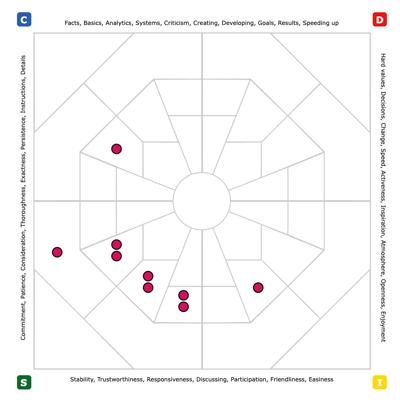
Strong DISC facilitation starts before the session begins. A powerful way to prepare is to run an Extended DISC® Team Map, even if the group is not an intact team. The Team Map helps you understand the group’s overall style and how they prefer to learn, communicate, and engage. This allows you to prepare the session intentionally instead of guessing what the room needs.
Want to see team report options or request a sample? Click here
How to Facilitate a D-Style Group
If your Team Map shows a D-style group, your session should be more direct, succinct, and outcome-focused.
D-style participants typically want to know:
- What’s the purpose?
- What’s the result?
- How does this help performance?
To engage them, present clear takeaways, keep activities moving, and focus on practical application. Offer opportunities for quick results, empowerment, and decision-making. A D-style group often responds best when DISC is positioned as a performance tool, not a personality discussion.
How to Facilitate an I-Style Group
If the group leans I-style, energy and interaction matter. I-style participants stay engaged through discussion, storytelling, and group participation. They often enjoy brainstorming how DISC applies to real-life workplace situations.
To connect with this group, try to be flexible with time, allow time to speak and collaborate, and keep the tone positive. The more they feel involved, the more likely they are to buy in.
How to Facilitate an S-Style Group
S-style groups value trust, stability, and shared understanding. They tend to engage when the facilitator creates a safe environment and clearly outlines expectations. They often want to understand how DISC improves teamwork and reduces stress.
To support S-style learners, establish rapport early, outline the agenda, and emphasize how DISC supports team harmony and long-term success. They may take longer to participate, so allowing time for reflection can lead to stronger engagement.
How to Facilitate a C-Style Group
C-style groups typically want accuracy, structure, and proof. They may ask more detailed questions and want to understand how DISC works, how it’s validated, and how it applies to real workplace roles. If the content feels vague, they may quietly disengage.
To engage C-style participants, provide logic, step-by-step processes, and clear explanations. Build time for reflection and avoid rushing through key concepts. C-style learners often need time to process before they speak, so silence is not a sign of failure—it may be a sign they are thinking.
Choosing the Right Activities for Your Group
The activities you use can determine whether DISC feels meaningful or forced.
Small-group discussions, paired exercises, and reflection activities work better for reserved groups, especially S and C-style learners. These formats give them time to process before speaking in front of the full group.
More active groups may respond better to quick discussions, fast-paced exercises, and interactive examples.
The key is choosing activities that match how the group naturally participates.
Adapting in Real Time: The Most Important DISC Skill
Even strong preparation cannot replace awareness during facilitation. Practicing DISC means paying attention to the room and being willing to adjust your pace, tone, and structure as you go. An effective facilitator notices shifts in engagement and responds quickly.
Ask yourself during the session:
- Are participants energized or fading?
- Do I need to slow down or speed up?
- Do they need more interaction—or more quiet thinking time?
Sometimes the best adjustment is adding a short activity, changing your delivery style, or allowing space for dialogue.
DISC facilitation is not scripted—it’s interactive and responsive.
How to Respond to Different DISC Styles During Discussion
One way to practice DISC is to intentionally respond to participants using language that fits their style. For example:
- When speaking to a D-style participant, focus on outcomes and results.
- When engaging an I-style participant, emphasize the positive and encourage discussion.
- When supporting an S-style participant, connect DISC to team impact and shared success.
- When answering a C-style participant, provide structure, logic, and a clear process.
Most sessions include multiple styles, so balance is essential. One helpful approach is to share quick takeaways first for your more active D and I-styles, then provide additional details and supporting materials for your more reserved S and C styles.
When participants notice you adapting, they see DISC as real. They see and value your effort.
Common Mistakes to Avoid When Facilitating DISC
Even experienced facilitators can lose impact if they fall into common habits. A frequent mistake is moving too quickly and overwhelming reserved learners. Another may be focusing too much on theory without connecting DISC to real workplace situations. Adjust pace and tone as the room demands. It may ebb and flow and require frequent adjustments.
The best DISC facilitators are confident enough to be flexible.
FAQ: Practicing DISC in Facilitation
Is teaching DISC enough to create behavior change?
No. Understanding DISC does not automatically lead to new habits. Participants need real examples, practice, and reinforcement to apply DISC in the workplace.
What is the best way to prepare for a DISC training session?
Running an Extended DISC® Team Map is one of the most effective preparation tools. It helps you tailor delivery, activities, and communication style to the group.
What if the group includes multiple DISC styles?
Most groups do. The best approach is to balance your delivery by providing quick key takeaways, interactive discussion, and structured supporting materials.
Do I need to change my facilitation style?
Not your personality—but your approach. Practicing DISC means using behavioral flexibility so every participant can engage and learn.
How can DISC improve training engagement?
DISC helps facilitators understand what different learners need to stay engaged, which improves participation, understanding, and long-term application.
Next Steps: Practice What You Teach
DISC facilitation becomes powerful when you prepare intentionally and adjust in real time. When participants see DISC modeled in the room, they don’t just learn the theory—they learn how to use it.
If you want to strengthen your facilitation skills and build credibility as a DISC trainer, the next step is developing behavioral flexibility through practice, tools, and structured training.
You've got this!