
Successful workplace outcomes are often determined by how well people communicate, collaborate, and handle conflict. The Extended DISC® Work Pair Assessment helps colleagues recognize these skills through understanding behavioral styles.
Knowing we need to communicate, collaborate, and handle conflict more effectively is one thing; knowing how to do it is another. This is where DISC provides a practical way to understand these differences and improve how people work together.
How the Extended DISC® Work Pair Assessment Improves Workplace Relationships

The Extended DISC® Work Pair Assessment provides information and key talking points to help colleagues understand how their behavioral styles interact at work. By comparing their DISC styles, the assessment highlights strengths, potential challenges, and opportunities for stronger collaboration.
Instead of focusing on personality conflicts of who is right or wrong, the assessment helps colleagues explore how their natural approaches to work influence communication, decision-making, and problem-solving. This helps create more productive conversations and actionable objectives for working better together.
How DISC Behavioral Styles Influence Workplace Communication and Collaboration
The DISC model identifies four primary behavioral styles:
Each style reflects different preferences for communication, decision-making, and collaboration.
When colleagues focus on understanding intentions rather than relying only on observable behaviors, conversations shift from judging actions to recognizing how different styles contribute to the working relationship. People know their own intentions, but others only see their actions.
For example, a colleague might send a short message like, “We need this done today.”
Their intention may be to keep things on track. But others may see the message as too direct or demanding.
When colleagues think about the intention behind the message, it can change how they respond. Instead of reacting to the perceived tone, they can focus on the intention behind the message and how the person prefers to work.
Let’s look at how each DISC style approaches work and collaboration.
Your D-Style Colleague
D-styles tend to:
- make quick decisions
- focus on results
- prioritize efficiency
D-styles respond positively to:
- clear goals
- fast decision-making
- efficient processes
Working effectively with a D-style
Because D-styles move quickly, their communication may seem overly direct. Try to communicate clearly and get to the point. When discussing decisions or priorities, focus on solutions and next steps.
Understanding that D-styles prioritize progress can help colleagues interpret their direct approach more accurately.
Your I-Style Colleague
I-styles tend to:
- encourage collaboration
- communicate openly
- focus on positive team relationships
I-styles often prioritize:
- team engagement
- open communication
- idea sharing
Working effectively with an I-style
I-styles are enthusiastic, expressive, and relationship-focused. They often bring energy and creativity to discussions. Allow time for conversation and acknowledge their ideas with positivity. When decisions need to be made, provide structure while still encouraging participation.
Your S-Style Colleague
S-styles typically:
- focus on stability
- support team cooperation
- prefer thoughtful decision-making
S-styles often prioritize:
- team harmony
- consistent processes
- clear expectations
Working effectively with an S-style
S-styles are supportive, patient, and dependable. They often bring stability and consistency to teams. Use a calm communication style and allow time for discussion. S-styles often help balance faster-paced colleagues by bringing steadiness to the team.
Your C-Style Colleague
C-styles tend to:
- analyze information carefully
- ask questions to clarify expectations
- focus on accuracy and planning
C-styles often prioritize:
- data and facts
- structured plans
- clear standards
Working effectively with a C-style
C-styles are analytical, detail-oriented, and focused on quality. Provide clear and detailed information and allow time for questions and analysis. Their questions often reflect a desire to ensure quality rather than hesitation.
Understanding DISC Work Pair Dynamics
Workplace challenges often come from the interaction between two behavioral styles that don't understand one another. Behavioral insights can help work pairs understand these differences more clearly.
For example:
- A D-style may prioritize speed
- An I-style may focus on team engagement
- An S-style may emphasize stability
- A C-style may prioritize accuracy
Instead of asking who is right or wrong, colleagues can review report results to discuss:
- What strengths does each person bring to the partnership?
- Where do communication styles differ?
- How can responsibilities be managed more effectively?
- What adjustments could improve collaboration?
These conversations help colleagues understand how their styles interact and how they can work together more effectively.
Using the Extended DISC® Work Pair Analysis to Guide Productive Conversations
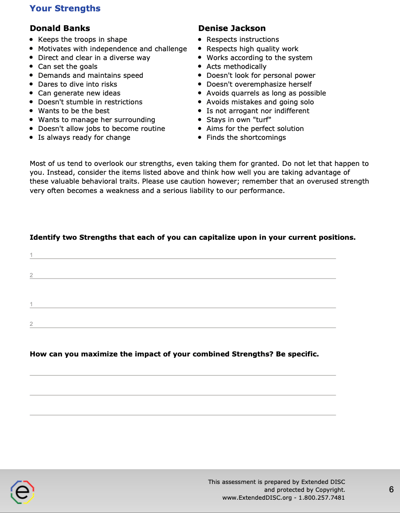
The Extended DISC® Work Pair Analysis helps colleagues talk about their working relationship in a clear and nonjudgmental way. Instead of relying on personal opinions or assumptions, the analysis provides objective information about each person’s behavioral style.
This creates a neutral starting point for discussion. Colleagues can focus on how their styles interact with one another, versus judging each other’s behaviors.
The Work Pair Analysis helps partners explore topics such as:
- each person's strengths and how to leverage them in the partnership
- how their communication styles may differ and how to adapt
- where misunderstandings may occur, and how to prevent them
- how responsibilities can be managed more effectively
- what overall adjustments could improve collaboration
These structured conversations are often used in coaching, onboarding, and leadership development to help colleagues quickly align how they work together.
By focusing on behavioral patterns rather than judgment, discussions remain constructive and solution-focused.
Improving Workplace Communication Through Behavioral Awareness
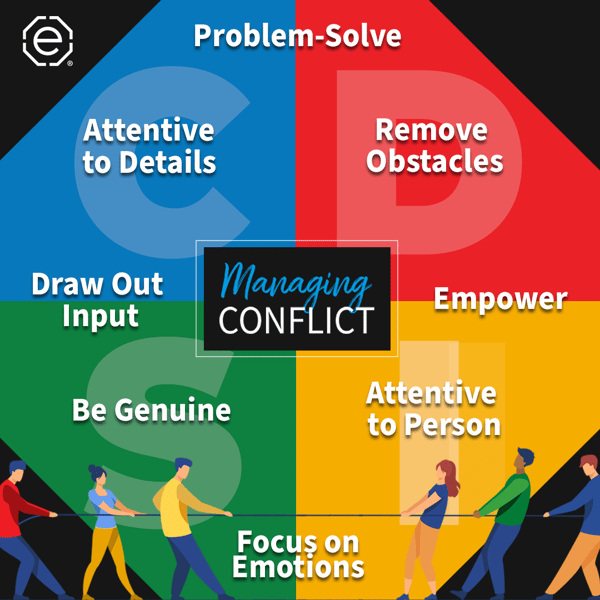
While the Work Pair Analysis focuses on two colleagues, similar insights can be expanded across teams using Extended DISC® Team tools, helping entire groups align how they communicate and collaborate. When teams understand behavioral differences, collaboration becomes easier.
Instead of misinterpreting behaviors, colleagues begin to recognize how different styles contribute to team success. This perspective helps teams:
- communicate more clearly
- manage responsibilities more effectively
- make stronger decisions
- build more productive working relationships
Understanding DISC styles provides a shared language for discussing workplace communication, collaboration, and conflict.
Don't leave it to chance
Workplace conflict and collaboration don’t have to be left to chance. When colleagues understand how their styles influence the way they work, communicate, and make decisions, they can approach challenges with more clarity and confidence. The Extended DISC® Work Pair Assessment helps turn that understanding into stronger, more effective working relationships.