
So, “What’s the best DISC leadership style?” Here's how to answer that question like a pro and help your participants get the most out of their DISC Assessments.
First off, the simplest and most direct answer is, "There isn’t one." Let's explore why, with 7 key facilitation points.
1. DISC is not about "fixing" you
You are not broken.
Your Extended DISC® Leadership Assessment doesn’t label or change who you are. Instead, it highlights your natural strengths and areas for development, helping you lead with greater self-awareness and intention.
The goal isn’t to become someone else. It’s to become the most authentic, effective, and self-aware version of you.
2. There is no “ideal” leader
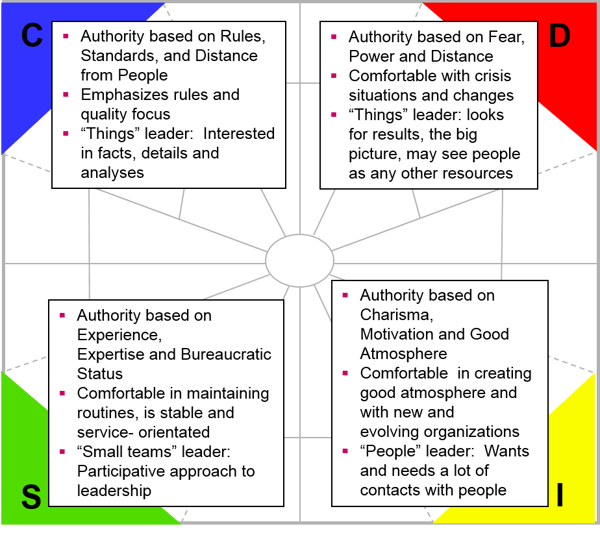
Extended DISC® describes behavioral preferences, not abilities. Oftentimes, D-styles are seen as “ideal" leaders because they tend to take charge and make quick decisions. However, Extended DISC® doesn’t say that D-styles are better leaders; it just describes how they prefer to operate.
Every DISC style has the potential to lead effectively; they do it in different ways.
Remember, Extended DISC® doesn’t measure intelligence, abilities, or experience. It helps you understand the how, not the how well.
3. Every leadership style has strengths and challenges
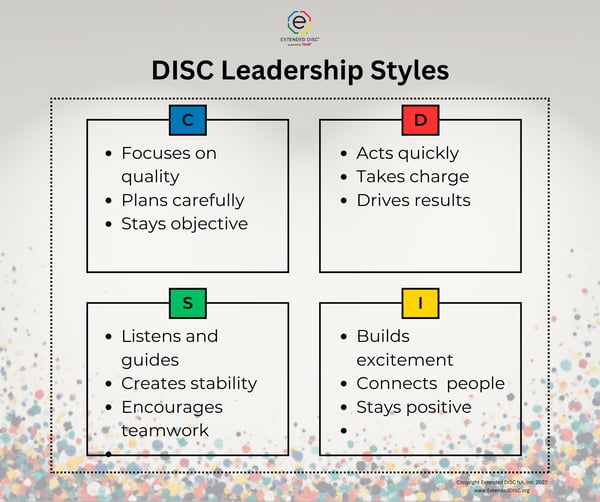
Every DISC leadership style has something powerful to offer:
- D-style leaders act quickly, take charge, and drive results.
- I-style leaders build excitement, connect people and stay positive.
- S-style leaders listen and guide, create stability, and encourage teamwork.
- C-style leaders are focused on quality, plan carefully, and remain objective.
With every strength comes a potential blind spot:
- D-style leaders may be too demanding or view people as resources instead of partners.
- I-style leaders can become disorganized or overly emotional under pressure.
- S-style leaders may be slow to initiate or hesitate to step into the spotlight.
- C-style leaders can fall into analysis paralysis, missing opportunities while seeking perfection.
Recognizing both sides helps you lead with authenticity and adaptability. The key is twofold:
- Know when and how to leverage your strengths.
- Know which challenges to develop and the steps to do it.
4. The most successful leaders...
The most successful leaders master two kinds of awareness.
Self-awareness
They understand their natural style and own it. They're confident in their strengths and mindful of their challenges. For example, I-styles lead with enthusiasm and optimism, but they also recognize they may talk too much or lose focus.
Situational awareness
Effective leaders know when their style works for them and when it doesn’t. They flex their approach depending on the situation and the people involved.
5. DISC is your behavioral road map

Extended DISC® measures your behavioral preferences, not your potential. It doesn't limit you or judge your skills, intelligence, or values. Instead, Extended DISC® shows how you prefer to do things.
Think of Extended DISC® as a map to how you naturally show up. Your natural style is the starting point. It helps you see where you are on the map (your natural DISC style) and chart a path to where you want to go (adjustment to make).
Once you understand your style, you can choose how to adjust and grow. With self-awareness, feedback, and experience, you can go far beyond what your natural style predicts.
6. No limits
 Extended DISC® shows your natural preferences, not your limits. It's simply who you are when you're not trying to adjust or flex your style.
Picture yourself in your most comfortable place, maybe at home or with a close friend. That's your natural style - when you don't need to adjust or change to the situation or people around you. Before you learned to adapt your approach, that was likely how you showed up earlier in your career.
You can’t change your natural style, but you can flex it. Leadership isn't about escaping who you are; it's about learning to use your natural tendencies effectively.
Leaders face many tough decisions. The way you make those decisions often reflect your DISC style:
- D-styles: decides quickly and expects results.
- I-styles: makes decisions based on energy and emotion.
- S-styles: takes time to consider others and how to maintain harmony.
- C-styles: gathers information and ensures accuracy before acting.
Each approach has strengths and blind spots. The goal isn't to change how you decide, but to recognize when to use your natural style and when to flex for the situation. There is no limit to what you can do.
7. Focus on Action
Don't get hung up on DISC labels. Your Extended DISC® profile is so much more than that. Focus on the content pages in the Extended DISC® Leadership Assessment:
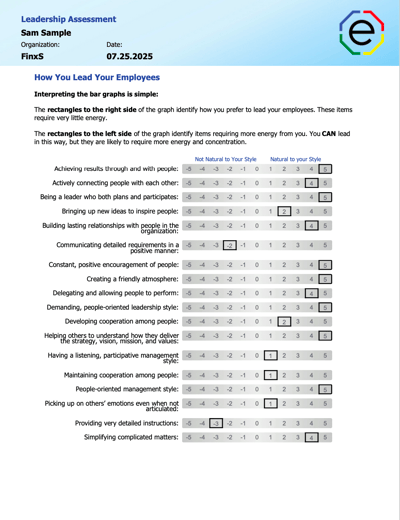 First, use your assessment to identify the strengths you bring to your leadership role and determine how you're using them. You can start with the following report sections:
- Your Motivators
- Your Strengths
- How You Lead Your Employees (positive scores)
- Next, decide where you want to develop. Focus on behaviors, not the DISC styles, e.g., “I want to make quicker decisions under pressure,” not “I want to be more D”. The following sample report sections can help:
- Situations that Reduce Your Motivation
- Reactions to Pressure Situations
- How You Lead Your Employees (negative scores)
- Lastly, determine how you can better adapt to the styles of your team members. DISC provides information on how they prefer to be managed, and do things. The following sample report sections can help:
- How to Identify Others' Styles
- How to Adjust Your Style to Achieve Your Goals with D-styles, I-styles, S-styles, and C-styles
These sections of the report are tailored to your style.
Remember, real leadership growth comes from turning insight into action; leading with awareness, empathy, and intention.
The overall takeaway:
- Awareness drives adaptability.
- DISC doesn’t predict or restrict your success. It equips you to lead more intentionally.
- Great leaders aren’t defined by their style; but by how well they understand, apply, and adapt their natural tendencies to lead others effectively.
- Your DISC style is just one part of your report. The real value is in the content sections, what describe your leadership preferences and suggestions for how to adjust.
Hope these tips help! What would you add?