
Goal setting is easier when it aligns with your natural work style. Use DISC to turn behavior-driven goal setting into habits that stick.
Why Behavior Matters in Goal Setting
 Goals don’t exist on their own—they show up in your daily actions. Motivation, follow-through, decision-making, and focus are all shaped by behavior. When goals clash with how you naturally think or work, they take more energy to maintain.
For example, someone who prefers structure and details may feel drained trying to chase a broad, constantly changing goal without clear steps. When goals align with your style, progress feels easier and perhaps even more achievable.
DISC helps predict how different behavioral styles approach goals, making them more effective, realistic, and sustainable.
How DISC Styles Approach Goals Differently
People are more likely to stay committed to their goals when they align with what motivates them.
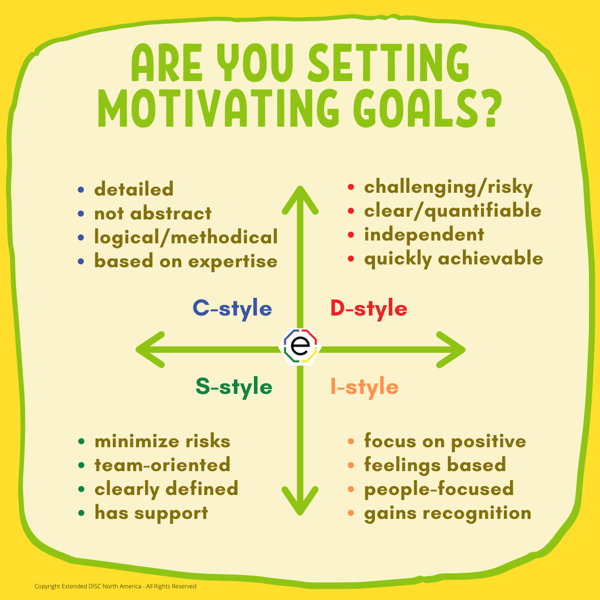 D-styles drive for quick achievability. They respond best to clear, challenging goals that allow for independence and quick wins. Goal-setting habits that support D-styles include taking decisive action, rewarding progress often, and removing unnecessary obstacles.
I-styles are motivated by energy, people, and recognition. They stay engaged when goals feel exciting and involve collaboration. Flexible goals, teamwork, and recognizing achievements help I-styles stay positive and accountable.
S-styles value stability and consistency. S-styles find better success when goals are broken into clear, steady steps and ongoing support. Regular check-ins and how the goal supports the team help them maintain momentum.
C-styles focus on accuracy and expertise. They want to understand why the goal is needed and do they have time to do it correctly. Clear plans and relevant data also help C-styles stay committed.
Turning Goals into Habits
Behavior-driven goal setting shifts the focus from the result to the habits that lead there. Instead of asking, “What do I want to achieve?” a better question is, “What can I do consistently to make progress?”
The same goal can look different depending on style. A D-style may track weekly individual performance numbers. An I-style may focus on collaboration and sharing ideas. An S-style may build steady routines and team support. A C-style may improve processes and accuracy over time.
When habits match behavioral preferences, progress feels more natural and lasts longer.
Supporting Team Goals with DISC
Behavior-driven goal setting also helps teams. When leaders understand behavioral styles, they can assign tasks, set expectations, and offer support more effectively.
Teams work better when goals are shared in ways that connect with different styles. Clearly defining actionable objectives will help your D-styles. Acknowledging large and small achievements supports your I-styles. Offering a clear plan will reassure your S-styles, and providing data and structure will guide your C-styles. Small modifications on your part as the manager create opportunities for your team's success.
From Awareness to Action
 Understanding behavior is just the start. Real change happens when teams apply that insight to everyday habits. When goals align with how people naturally work, motivation increases and follow-through improves.
Behavior-driven goal setting isn’t about changing who people are. It’s about setting goals that fit how they work best. DISC provides the awareness, and intentional habits turn that awareness into results.